
Understanding the Core Components of Digital Learning
As you explore digital learning solutions, two fundamental technologies will consistently emerge: the Learning Management System (LMS) and the authoring tool. Though both play crucial roles in modern training ecosystems, they address different challenges and serve complementary functions.
This comprehensive guide clarifies the essential distinctions between these platforms, examines their unique capabilities, and reveals how their integration creates powerful learning environments. You’ll gain the clarity needed to select solutions that align with your organizational objectives.
Defining Authoring Tools: Your Content Creation Engine
An authoring tool represents specialized software that empowers users to build interactive multimedia experiences and digital applications without deep technical expertise. These versatile platforms serve diverse industries—from website development and mobile applications to interactive presentations, eLearning courses, training programs, and multimedia publications.
These solutions deliver user-friendly interfaces featuring drag-and-drop capabilities, ready-made templates, and multimedia integration that combines text, imagery, audio, video, and interactive components into unified digital experiences.
Contemporary authoring platforms stand out through visual development environments, automated code generation, instant preview functionality, and cross-platform publishing capabilities. These features enable content creators, educators, designers, and business professionals to efficiently transform concepts into engaging interactive products.
Essential Authoring Tool Capabilities
Visual Development Interface: Intuitive drag-and-drop functionality and WYSIWYG editors enable content development without coding skills, democratizing creation for non-technical team members.
Multimedia Integration: Effortless incorporation of images, videos, audio files, animations, and interactive elements produces rich, compelling content experiences.
Template Libraries: Professional pre-designed layouts, themes, and components accelerate production timelines while ensuring quality and consistency.
Interactive Elements: Comprehensive tools for adding clickable buttons, forms, navigation systems, animations, and user input features that drive engagement and enhance functionality.
Multi-Platform Publishing: Flexible export options supporting various formats and platforms—web browsers, mobile devices, desktop applications, and LMS environments.
Collaboration Features: Real-time editing capabilities, version control systems, and review workflows facilitate team-based development and streamlined content management.
Leading Authoring Solutions
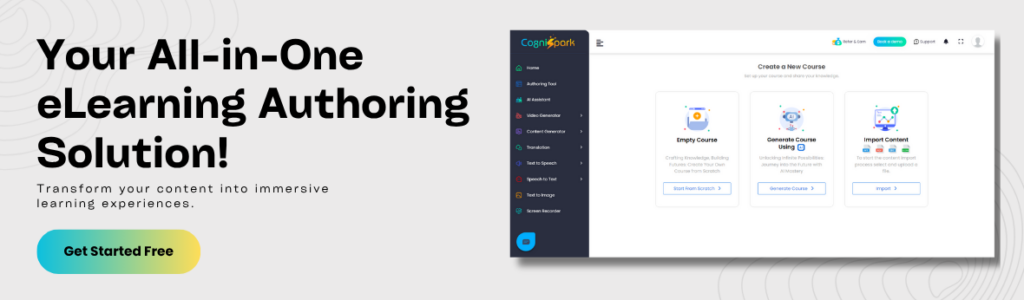
Cognispark AI: Specialized platform for educational content development featuring AI-powered course creation and assessment generation capabilities.
Adobe Captivate: Sophisticated authoring solution offering AI voices and simulation tools for building complex multimedia training programs.
iSpring Suite: PowerPoint-integrated platform enabling rapid development of interactive courses and assessments.
Understanding Learning Management Systems: Your Delivery Platform
An LMS functions as a centralized online platform that organizes, distributes, and manages your eLearning content ecosystem. These systems ensure learners access training materials conveniently from any location at any time. Primary capabilities include:
Core LMS Functionalities
Content Library: Structures courses and training modules into organized, accessible playlists for streamlined navigation.
Progress Tracking: Monitors learner performance and engagement levels through interactive quizzes and comprehensive assessments.
Gamification and Rewards: Provides badges, certificates, and recognition mechanisms that fuel learner motivation.
Social Learning: Promotes collaboration and peer-to-peer discussion among participants.
Personalized Learning Paths: Delivers course recommendations tailored to individual preferences and performance metrics.
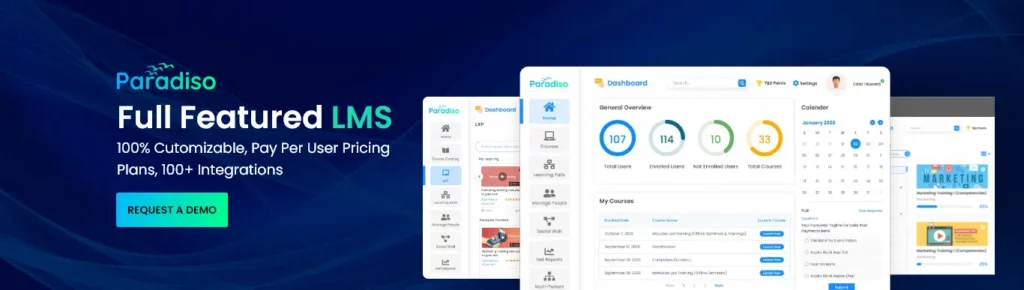
Advanced platforms like Paradiso LMS extend beyond these baseline features by enabling seamless integration with authoring solutions. This creates comprehensive, adaptable learning environments that scale and evolve with your organizational requirements.
The Strategic Advantage of LMS with Authoring Tools Integration
Combining an LMS with an Authoring Tool creates powerful synergy for organizations pursuing competitive advantages. This integration drives both operational efficiency and learner engagement:
Reduce Time and Cost
Organizations investing in both LMS and eLearning authoring tool platforms realize substantial time and resource savings. Integrated systems streamline training operations—employee onboarding flows smoothly, content updates happen rapidly without external trainers or physical venues.
Boost Engagement and Motivation
Interactive learning experiences enhanced by gamification elements and social learning features significantly increase learner engagement. Timely feedback mechanisms, assessments, and recognition programs maintain employee motivation throughout learning journeys.
Stay Budget-Friendly and Future-Ready
Maintaining current, relevant learning content remains critical for organizational success. Integrated authoring capabilities simplify processes for updating and expanding course catalogs, ensuring your organization maintains agility amid rapid market evolution.
For modern businesses, pairing robust platforms like Paradiso LMS with powerful eLearning authoring tool solutions represents the pathway to training excellence. This integration elevates learning experiences while simultaneously improving operational efficiency, reducing costs, and delivering superior training outcomes.
Conclusion
Modern digital learning demands strategic integration of both content creation and delivery capabilities. Understanding the distinction between LMS and authoring tools is essential for building effective training ecosystems. While authoring tools create engaging content, an LMS distributes, tracks, and optimizes that content at scale.
LMS with authoring tools integration eliminates redundant workflows, reduces vendor dependency, and accelerates training deployment. This unified approach delivers consistent learning experiences while providing the analytics needed to continuously improve effectiveness.
Ready to transform your learning and development approach? Paradiso LMS, combined with integrated authoring capabilities, offers the complete solution to drive measurable business results through engaging, effective training experiences.