Introduction
The way people learn has changed significantly.
Traditional classroom training alone is no longer enough, and fully online learning often lacks engagement. This gap has led to the rise of blended learning—a practical approach that combines in-person interaction with digital learning experiences.
For organizations and educational institutions, blended learning platforms are becoming essential. They offer flexibility, improve engagement, and make it easier to deliver structured yet adaptable learning programs.
This guide explores what blended learning platforms are, why they matter, the models you can use, and the best platforms to consider.
What is a Blended Learning Platform?
A blended learning platform is a system that brings together classroom-based training and online learning into one unified experience.
Instead of managing different tools separately, everything is centralized. Trainers can conduct live sessions, share digital content, assign assessments, and track learner progress—all within a single platform.
This integrated approach ensures that learning remains consistent, organized, and easy to manage.
Why Blended Learning Platforms Are Gaining Popularity
Higher Engagement Levels: By combining videos, discussions, quizzes, and live sessions, learning becomes more interactive. This leads to better participation and improved knowledge retention.
Personalized Learning Experience: Many modern blended learning LMS platforms use data and AI to tailor content based on learner performance, making training more relevant and effective.
Cost Efficiency: Reducing the need for physical infrastructure, travel, and printed materials helps organizations cut costs without compromising quality.
Improved Collaboration: Features like discussion forums, group activities, and live chats encourage interaction and peer learning.
Real-Time Tracking and Insights: Built-in analytics provide clear visibility into learner progress, helping organizations measure outcomes and improve training strategies.
Popular Blended Learning Models
Blended learning can be implemented in different ways depending on the learning goals and audience.
Face-to-Face Driver Model
Primarily classroom-based learning supported by digital tools for reinforcement.
Rotation Model
Learners move between different formats such as instructor-led sessions, online modules, and collaborative activities.
Flex Model
Online learning is the main mode, with instructors available for support when needed.
Online Lab Model
Learning takes place online in a supervised environment like a training lab.
Self-Blended Model
Learners independently choose additional online courses to enhance their knowledge.
Enriched Virtual Model
Mostly online learning with occasional in-person sessions to strengthen understanding.
Features to Look for in a Blended Learning Platform
Selecting the right platform requires more than just comparing features. However, certain capabilities are essential:
- User-friendly interface for easy navigation.
- Content creation tools for building interactive courses.
- Mobile accessibility for learning on any device.
- Integration with third-party tools such as CRM and video conferencing platforms.
- Advanced analytics and reporting.
- Gamification elements to boost engagement.
- Multilingual support for global teams.
Top Blended Learning Platforms to Explore
Choosing the right platform depends on your training needs, team size, and long-term goals. Below are some of the most widely used blended learning platforms, each with its own strengths.
Paradiso LMS
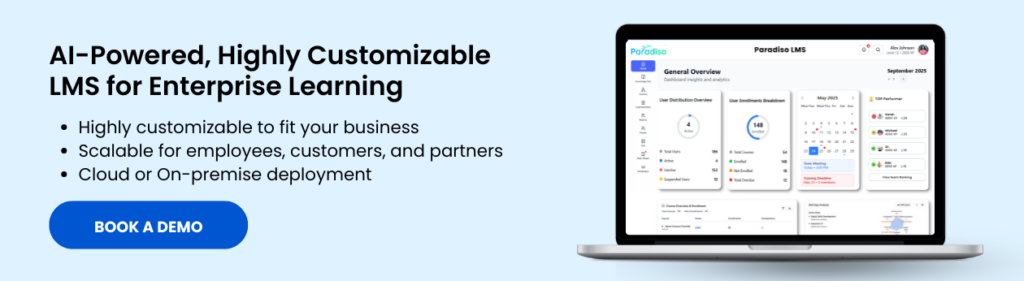
Paradiso LMS is a comprehensive solution designed to support a wide range of blended learning strategies. It works well for both corporate training and educational use cases.
The platform brings together classroom training, virtual sessions, and self-paced learning in a single system, making it easier to manage different learning formats without complexity.
Key strengths include strong integration capabilities, multilingual support, gamification features, and AI-driven analytics. It is particularly useful for organizations that need a scalable and customizable platform.
Docebo
Docebo focuses heavily on personalization and automation.
Its AI-driven approach helps deliver tailored learning experiences by recommending content based on user behavior. The platform also supports social learning, allowing learners to collaborate and share knowledge.
With a clean interface and a wide range of integrations, Docebo is well-suited for organizations aiming to create engaging and adaptive training environments.
LearnUpon
LearnUpon is known for its simplicity and ease of use.
It allows organizations to quickly set up and deliver training programs without extensive technical expertise. The platform offers structured learning paths, integration with business tools, and reliable reporting features.
This makes it a practical choice for teams looking for an efficient and straightforward solution.
Blackboard Learn
Blackboard Learn is widely used in academic environments and is well-suited for structured learning programs.
It offers strong collaboration tools, including virtual classrooms and discussion forums, making it ideal for blended learning setups that rely on interaction between learners and instructors.
The platform also includes advanced assessment and grading features.
Moodle
Moodle is an open-source platform that offers a high level of customization.
Organizations can tailor the platform to meet specific needs using its extensive plugin ecosystem. It is also a cost-effective option since there are no licensing fees.
Moodle is best suited for organizations that have the technical resources to manage and customize their learning environment.
How to Choose the Right Blended Learning LMS
Selecting the right platform requires careful evaluation. Consider the following factors:
- Alignment with your learning objectives.
- Ease of use for both learners and administrators.
- Scalability as your organization grows.
- Budget and long-term value.
- Availability of reliable customer support.
The right platform should not only meet your current needs but also support future growth.
Conclusion
Blended learning platforms are transforming how training and education are delivered.
They provide the flexibility of online learning while maintaining the effectiveness of in-person interaction. This combination leads to better engagement, improved outcomes, and more efficient training processes.
As organizations continue to adapt to changing learning needs, adopting a blended learning LMS is becoming less of an option and more of a necessity.