Introduction
Most corporate training programs don’t fail because of lack of content.
They fail because learning stays isolated.
Employees attend sessions, complete modules, and move on—without real conversations, collaboration, or application. That’s where social learning in corporate training is changing the game.
As we move into 2026, organizations are shifting from structured, top-down training to more collaborative, peer-driven learning environments. Social learning is no longer optional—it’s becoming a core part of how modern teams grow, share knowledge, and adapt faster.
What is Social Learning in Corporate Training?
Instead of learning alone, employees learn by:
- Sharing experiences
- Solving problems together
- Observing peers
- Participating in discussions
In a corporate setting, this happens through communities, collaboration tools, mentoring, and shared content platforms.
It turns learning from a one-time activity into an ongoing, everyday experience.
Why Social Learning Matters More Than Ever in 2026
Learning Happens Faster
When employees learn from each other, knowledge spreads quickly across teams.
It Feels More Relevant
Real‑world experiences shared by peers often feel more practical than formal training content.
Engagement Naturally Improves
People are more likely to participate when learning is interactive and conversational.
It Builds a Learning Culture
Instead of depending only on formal programs, organizations create an environment where learning happens continuously.
How Technology is Powering Social Learning
Technology is a major driver behind the growth of social learning.
Tools like Slack, Microsoft Teams, and Zoom have made collaboration easier than ever. At the same time, modern LMS platforms now include social features like discussion forums, peer feedback, and community spaces.
AI is also playing a big role by:
- Recommending relevant content
- Connecting learners with similar interests
- Supporting collaborative problem-solving
Emerging technologies like VR and AR are adding immersive collaboration experiences, especially useful for complex or hands-on training.
The Shift Toward Collaborative Learning Culture
Social learning works only when the culture supports it.
Organizations are moving away from rigid, top-down training models and encouraging:
- Knowledge sharing across teams
- Open communication
- Peer-to-peer learning
- Mentorship programs
Leadership plays a key role here. When leaders actively participate, share knowledge, and encourage collaboration, it sets the tone for the entire organization.
The Role of AI and Social Platforms in Collaboration
The combination of AI and social platforms is transforming how teams interact.
AI helps reduce noise by showing relevant discussions and content, while automation handles routine tasks like answering common queries or scheduling.
Social platforms create space for:
- Idea sharing
- Real-time discussions
- Community building
This combination leads to better collaboration, faster decision-making, and more innovative thinking.
Microlearning and Employee-Generated Content
One of the biggest shifts in social learning is how content is created and consumed.
Microlearning
Short, focused learning modules make it easier for employees to learn quickly and apply knowledge immediately.
Employee-Generated Content
Employees are no longer just learners—they are contributors.
They share:
- Tips and best practices
- Real-life experiences
- Quick solutions to common problems
This creates a knowledge base that is practical, relevant, and constantly evolving.
Why Mobile Learning is Essential
Social learning doesn’t happen only at desks.
Mobile access allows employees to:
- Join discussions anytime
- Access content on the go
- Collaborate in real time
This flexibility increases participation and keeps learning active beyond formal sessions.
What Works and What Doesn’t in Social Learning
What Works
- Creating a safe and open environment
- Encouraging peer learning and mentorship
- Using the right technology
- Promoting informal interactions
- Recognizing contributions
Common Mistakes to Avoid
- Treating social learning like formal training
- Ignoring organizational culture
- Lack of leadership involvement
- Not measuring impact
Balancing strategy with flexibility is key to success.
The Impact of Peer Mentoring and Knowledge Sharing
Peer mentoring plays a big role in social learning.
It helps:
- Transfer practical knowledge faster
- Improve employee confidence
- Build stronger relationships within teams
- Reduce onboarding time
Knowledge sharing also improves agility, helping organizations respond quickly to changes.
How to Measure Social Learning Effectiveness
To understand if social learning is working, focus on:
- Engagement levels (comments, shares, participation)
- Learning progress and completion rates
- Knowledge retention
- Feedback from learners
- Community activity
Tracking these metrics helps improve learning strategies over time.
The Role of LMS and Social Platforms
Modern learning platforms are no longer just content delivery systems.
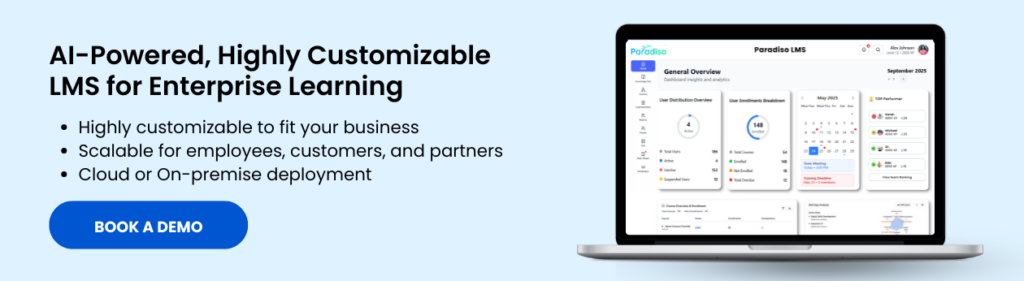
Platforms like Paradiso LMS combine structured learning with social features such as:
- Discussion forums
- Peer collaboration tools
- Gamification elements
- Community spaces
A well-designed social learning LMS goes a step further by actively encouraging interaction, knowledge sharing, and community-driven learning rather than just delivering content.
When LMS platforms integrate with social tools, they create a complete learning ecosystem where formal and informal learning work together.
Best Practices for Social Learning in 2026
Build a Culture of Trust
Encourage open communication and make it safe for employees to share ideas.
Use the Right Tools
Adopt platforms that support collaboration and integrate easily into daily workflows.
Encourage Informal Learning
Create spaces for casual discussions and knowledge sharing.
Keep Content Short and Relevant
Use microlearning to make learning easier to consume.
Track and Improve Continuously
Use data and feedback to refine your approach.
Set Clear Guidelines
Ensure respectful and meaningful interactions within learning communities.
Stay Updated with Trends
Explore AI, VR, and other emerging technologies to keep learning engaging.
Conclusion
Social learning is reshaping corporate training.
It moves learning from isolated sessions to continuous, collaborative experiences. Organizations that embrace this approach are not only improving engagement but also building more agile and innovative teams.
As we move into 2026, the focus is clear—learning should be shared, interactive, and embedded into everyday work.